In the field of Non-Destructive Testing (NDT), sonic testing has become an essential method for assessing the health of structures without compromising their integrity. But once your device displays a value in m/s (meters per second), how can you tell if your concrete is of good quality?
This guide helps you interpret the results of your ultrasonic pulse velocity (UPV) measurements.
1. The principle of UPV measurement
The test consists of measuring the travel time of an ultrasonic wave between a transmitter transducer and a receiver. The speed  is calculated using the following formula:
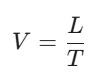
Where (D) is the distance between the probes and (T) is the transit time. The denser and more homogeneous the concrete, the faster the wave travels.
2. Concrete quality interpretation chart
Although values may vary depending on the concrete mix design and type of aggregates, international standards (such as ASTM C597) generally agree on the following orders of magnitude:
| Ultrasonic velocity (m/s) | Concrete quality |
| Above 4,500 | Excellent (Very dense concrete) |
| 3,500 to 4,500 | Good to very good |
| 3,000 to 3,500 | Average (Suspicion of compactness) |
| 2,000 to 3,000 | Low (Probable presence of porosity) |
| Below 2,000 | Very poor (Holes, cracks, or honeycombing) |
3. Factors that influence your results
Please note that low speed does not always mean poor concrete quality. Several factors can “slow down” the wave:
- Moisture: Concrete saturated with water transmits waves faster than dry concrete.
- Reinforcement: Steel conducts ultrasound twice as fast as concrete
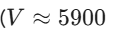 m/s). If your wave path crosses an armature, the speed will be artificially increased.
 - Temperature: Extreme variations can affect measurement accuracy.
4. Practical applications: Beyond resistance
Sonic auscultation with a device such as the CTR372 is not only used to estimate compressive strength. It is essential for:
- Detecting internal cracks: If the wave encounters an air crack, it must bypass it, which increases the travel time and reduces the calculated velocity.
- Measuring the depth of a surface crack: By placing the probes on either side of the crack.
- Check homogeneity: Compare different areas of the same structure to identify vibration defects during pouring.
5. Why combine ultrasound with the concrete test hammer ?
The combined method (known as SONREB) is the most reliable. By combining surface hardness (test hammer) and sonic velocity (ultrasonic), the margin of error is reduced and a much more accurate estimate of the actual strength of the concrete is obtained.
🚀 Optimize your diagnostics with CTRMAT
To obtain repeatable measurements that comply with diagnostic standards, it is crucial to use certified equipment. The CTR372 sonic auscultation device offers an intuitive interface and measurement accuracy tailored to the requirements of design offices and concrete pathology experts.
Need technical advice or a quote? > 👉 See the technical data sheet for the CTR372 sonic auscultation device.